Find Your Guide
| If you are… | Read this guide |
|---|---|
| Onmyoji/anime/game fan | Onmyoji Fan Pilgrimage Guide |
| Interested in history & blessings | Continue reading below |
Seimei Shrine in Kyoto’s Kamigyo ward is dedicated to Abe no Seimei (921–1005), who served six emperors and is often called the most powerful onmyoji (yin-yang master) of the Heian period. Founded in 1007 by order of Emperor Ichijo on the site of Seimei’s former residence, the shrine draws visitors from across Japan seeking protection from evil and misfortune.
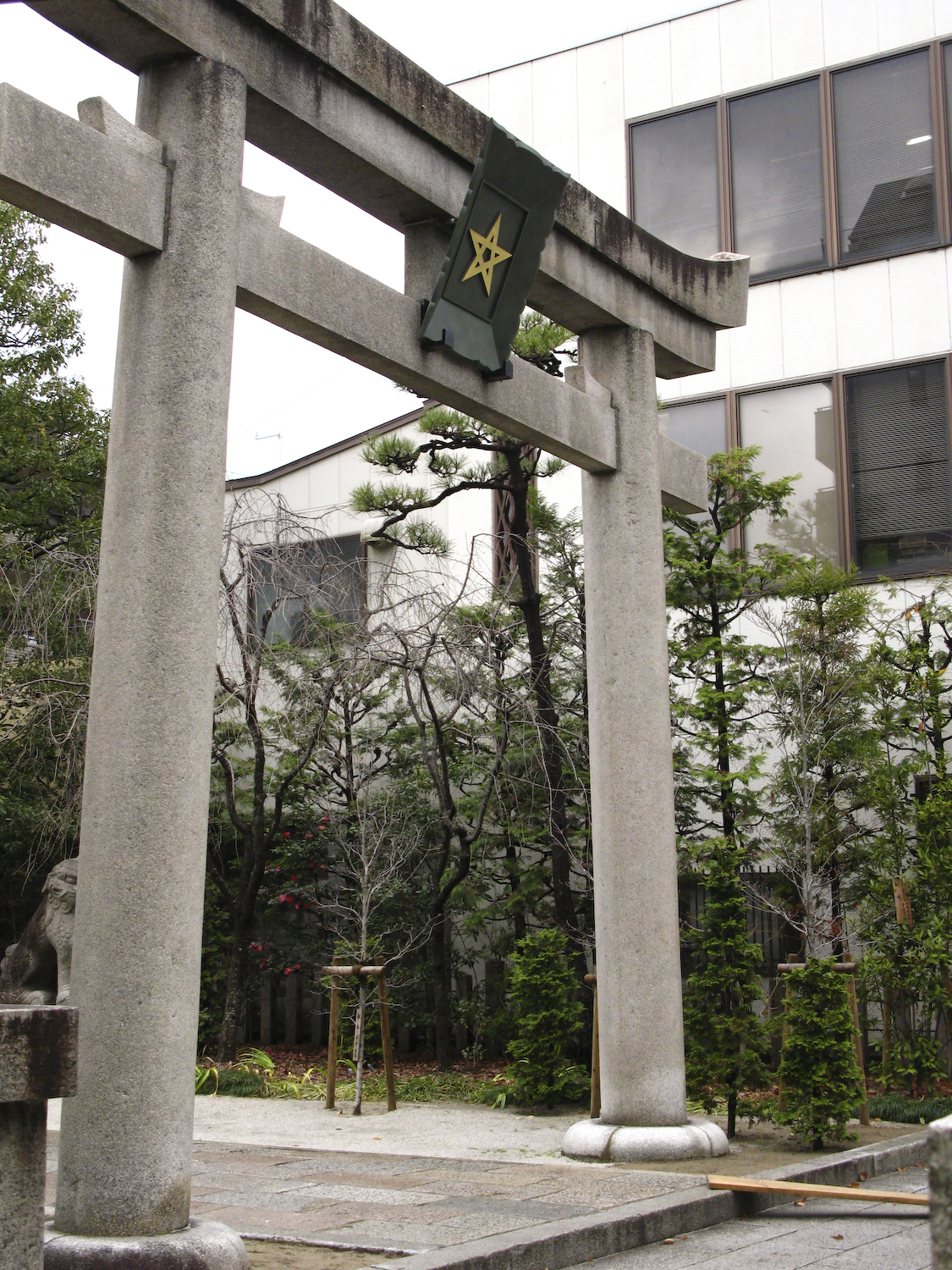
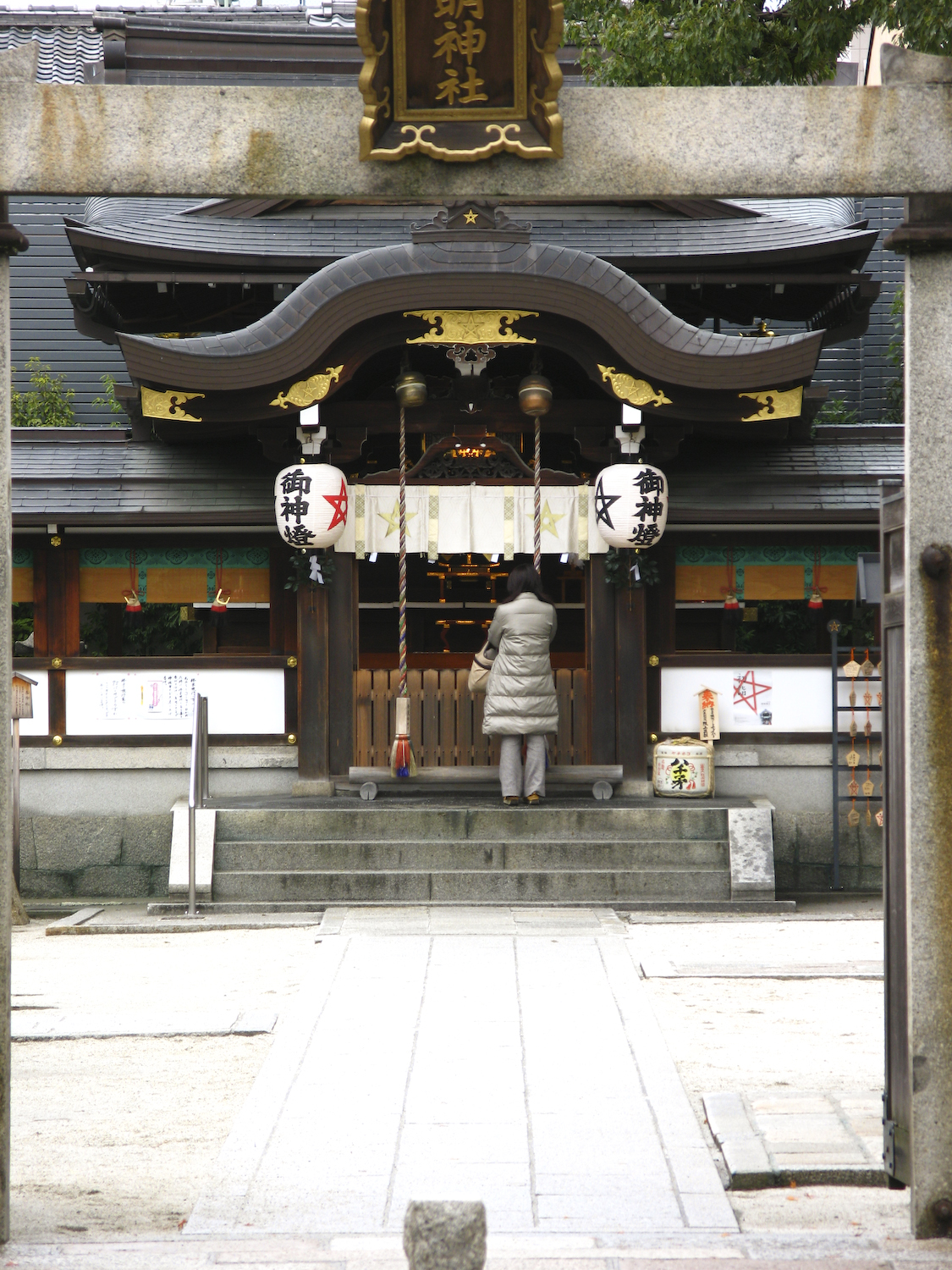
What makes Seimei Shrine instantly recognizable: the five-pointed star (the Seimei Kikyo pentagram; kikyo is the Japanese bellflower, the motif of the shrine’s crest) appears on the torii gate, lanterns, amulets, and throughout the compact grounds. The shrine is small—you can visit in 30–60 minutes—but packed with things to see: the Seimei Well engraved with the pentagram crest, the yakuyoke (evil-warding) peach statue, shikigami stone figures, and the old railing posts that recreate the legendary Ichijo Modori Bridge.
The shrine is a 12-minute walk from Imadegawa Station and easy to combine with Kyoto Imperial Palace. Admission is free.
Who Was Abe no Seimei?
Abe no Seimei served as an onmyoji in the imperial court’s Onmyoryo (Bureau of Yin and Yang) during the mid-Heian period. He was an expert in astronomy, calendar science, and divination who served multiple emperors over his long career.
According to the shrine’s own history page:
- Six emperors: he served as a close adviser to six emperors in turn, from Emperor Suzaku to Emperor Ichijo
- Founding Japanese onmyodo: during Emperor Murakami’s reign he is said to have travelled to Tang China, received teachings from the hermit Hakudo Sennin, and on his return established Japan’s own form of onmyodo
- Shikigami (spirit servants): he is said to have commanded them at will, and stories say they were sealed beneath Ichijo Modori Bridge because his wife was frightened of them
After Seimei’s death in 1005 at age 85, Emperor Ichijo ordered the construction of a shrine on the site of his residence, establishing what became Seimei Shrine.
The shrine’s grounds were once vast, but they shrank after the Onin War (1467–1477) through Toyotomi Hideyoshi’s rebuilding of the capital and repeated wars. Parishioners later restored the shrine step by step, and in 1950 the grounds facing Horikawa Street were enlarged. Through novels, manga, films and games, Seimei has become widely known again, and the shrine now draws devotees from across Japan.
Key Highlights: What to See
The Pentagram Torii Gate
The shrine’s torii features the Seimei Kikyo—a five-pointed star that serves as the emblem of onmyodo protection. This pentagram symbol appears throughout the grounds. The torii is unusual: its plaque bears the shrine crest instead of the shrine’s name, which the shrine says is rare in Japan.
Seimei Well (Seimei-no-Ido)
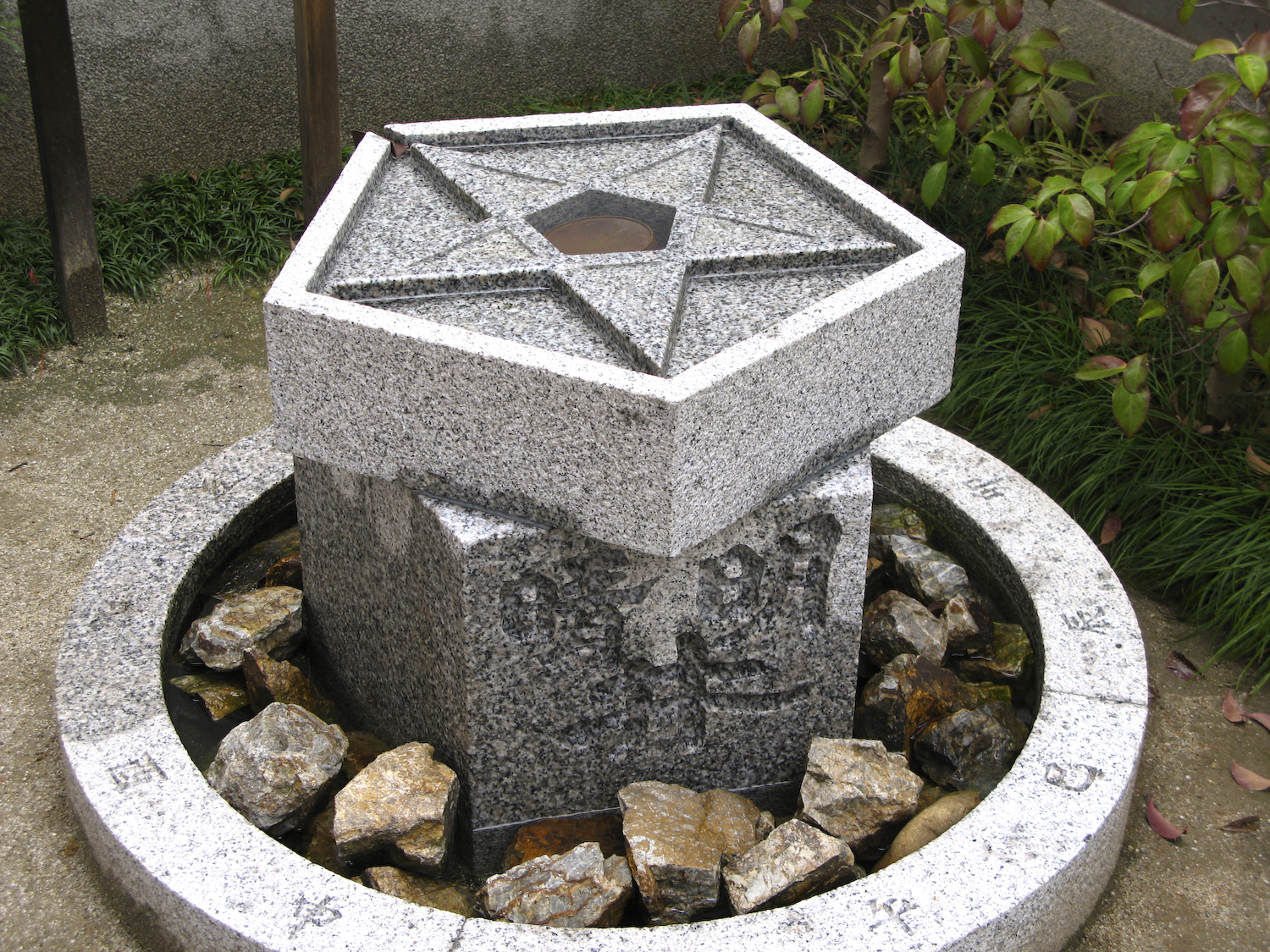
A stone well engraved with the pentagram crest, said to have been brought forth by Seimei’s spiritual powers and believed to bring recovery from illness. The water outlet faces that year’s lucky direction (eho) and is moved annually at Risshun (around February 4).
Yakuyoke Peach Statue
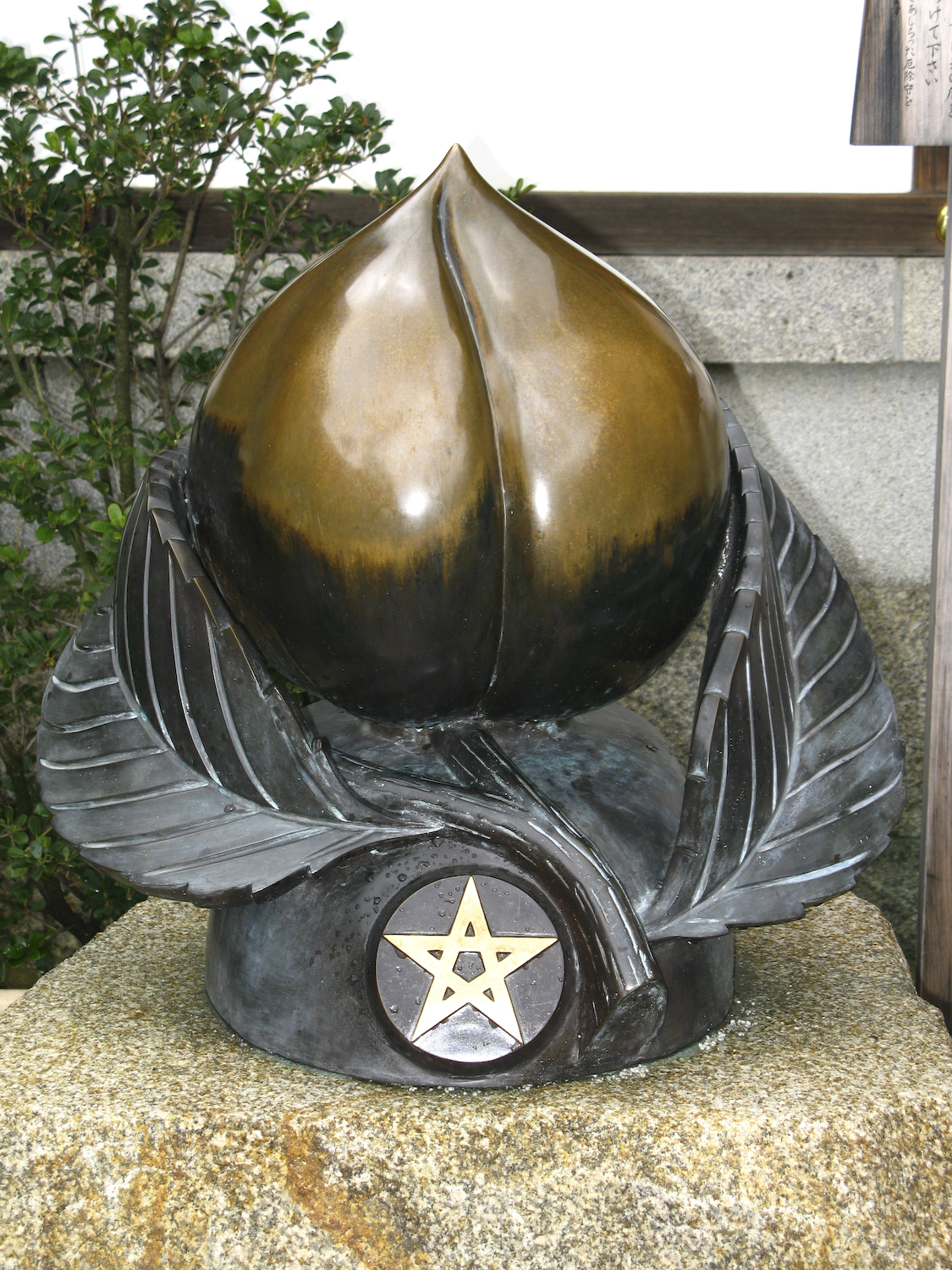
A bronze peach statue that visitors rub to remove misfortune. Peaches have been considered to have protective powers against evil since ancient Chinese tradition. The shrine says that stroking your own misfortune onto the peach leaves you feeling refreshed.
Shikigami Stone Statues
Stone figures representing the spirit servants Seimei is said to have commanded. According to legend, Seimei hid his shikigami beneath Ichijo Modori Bridge because his wife found them frightening.
Ichijo Modori Bridge (Recreated in the Grounds)
Inside the grounds, the railing posts of the previous bridge have been moved here to recreate the old bridge. The actual Ichijo Modori Bridge crosses the Horikawa river about 100m south of the shrine (rebuilt in 1995). Because “modoru” means “to return,” wedding and funeral processions still avoid crossing it.
Spiritual Benefits
Protection from Evil and Misfortune (Mayoke/Yakuyoke): The shrine describes itself as a shrine of protection from evil and misfortune, built on Seimei’s long-standing reputation for lifting people’s troubles.
Safe Travel and Traffic Safety: The shrine’s prayer menu lists safe travel and traffic safety, and there is a traffic-safety amulet to attach to a car, motorbike or school bag.
Healing from Illness: The Seimei Well is believed to bring recovery from illness, and the shrine offers a Byoki Heiyu (illness recovery) amulet that contains a leaf from its sacred camphor tree.
Household Safety and Protection from Evil: Paper talismans (ofuda) for family safety, and for keeping evil from entering the home, are also offered.
Academic Success: Seimei was a scholar of astronomy and calendar science, and the shrine’s prayer menu includes academic success and exam prayers. Amulets for study and work performance (Koujo Mamori) and for concentration just before exams (Mizukagami Mamori) are available.
The Atmosphere of the Grounds
Some visitors say they feel a shift in atmosphere as they enter the grounds.
Seimei’s appearances in novels, manga, films and games have made him widely known, and the shrine feels both sacred and culturally alive.
How to Visit: Recommended Route (30–60 minutes)
1. Pass through the pentagram torii – Look up to see the Seimei Kikyo
2. View shikigami statues – Spirit servant figures beside the old Ichijo Modori Bridge
3. Ichijo Modori Bridge – The old bridge’s railing posts, set up to recreate it
4. Purify at the temizuya (water pavilion)
5. Seimei Well – Photograph the pentagram engraving and the water outlet that turns each year
6. Worship at main hall – Two bows, two claps, one bow. Silently state your wish for protection
7. Rub the yakuyoke peach – Touch the bronze statue to remove misfortune
8. Sacred camphor tree – Estimated to be 300 years old; the shrine invites visitors to place both hands on the trunk and feel the tree’s strength
9. Amulet office – Goshuin (shrine seal stamps) and pentagram goods
Quick visit (30 min): Steps 1, 5, 6, 7, 9.
Thorough visit (60 min): All steps plus time for shopping for amulets.
Goshuin and Amulets
Goshuin (Shrine Seal): Available at the amulet office, which closes at 4:30 PM. The official site does not list the fee, so check the notice at the office.
Goshuin Book: JPY3,500 (gold-thread Seimei Kikyo cover, with the shrine’s seal printed on the first page).
Amulets (prices from the shrine’s official list; some prices were revised on 1 July 2026):
| Amulet | Price | Purpose |
|---|---|---|
| Yakuyoke Mamori | JPY1,400 | For unlucky years; peach design |
| Koujo Mamori | JPY1,400 | Improving study and work performance |
| Mizukagami Mamori | JPY1,700 | Concentration and protection from misfortune; inspired by the Seimei Well |
| Byoki Heiyu Mamori | JPY3,200 | Recovery from illness; contains a leaf of the sacred camphor tree |
| Standard amulet | JPY1,400 | Protection from evil, health and safe childbirth (the most common amulet) |
Best Times to Visit
Best season: Autumn—the Seimei Festival, held on the autumn equinox day each year (23 September in 2026), is in the shrine’s words the most important ritual of the year. The eve festival starts at 7:00 PM the night before with yudate kagura (a hot-water purification dance), and on the festival day a mikoshi (portable shrine) procession leaves at 1:00 PM and returns at 6:00 PM. Maple-leaf (momiji) amulets are offered from mid-November to mid-December.
Special dates:
- New Year’s Day: The first ritual (Saitan-sai) starts at 8:00 AM, and visitors begin arriving soon after midnight (check the shrine’s website for its New Year hours).
- Setsubun (around Feb 3): Visitors breathe onto paper figures (hitogata) to transfer their impurities, then offer them at the shrine (Setsubun Hoshi-matsuri).
- Risshun (around Feb 4): The Seimei Well outlet is turned to face the year’s lucky direction.
- Mid-June to September: The shrine’s kikyo (Japanese bellflower) garden begins to bloom in mid-June and is full of flowers in July. A kikyo amulet is offered only in the flowering season.
- Seimei Festival (autumn equinox day): The year’s main event.
Hours to plan around: The grounds are open 9:00 AM–5:00 PM, but the amulet office (goshuin and amulets) closes at 4:30 PM, so buy your amulets and goshuin before then.
If you want quiet: Many people come right after midnight on New Year’s Day, so avoid the first days of January.
Practical Information for Different Visitors
Photography
The shrine’s rules prohibit commercial or paid photography and drone flights without permission, as well as behavior that disturbs other worshippers. For casual photos, the best subjects are the pentagram torii gate, Seimei Well (from above to capture the star shape), and the yakuyoke peach statue. The grounds are small, so a wide-angle lens or phone camera works well. Please keep other worshippers out of your frame.
Wheelchair Access
The shrine’s website gives no information on steps or barrier-free access. If you use a wheelchair, call the shrine office first on 075-441-6460 (9:00 AM–5:00 PM), or ask your hotel staff to call for you. Note that guests at a formal prayer service remove their shoes to enter the hall.
Visiting with Children
Children may enjoy spotting the pentagram marks and the shikigami statues, and the peach statue is a quick, hands-on stop. A visit takes 30–60 minutes.
Visiting with Pets
Dogs, cats and other pets cannot be brought into the shrine; guide dogs, hearing dogs and service dogs are the exception. The shrine accepts a “pet health prayer” by mail instead (JPY3,500 per pet; a prayer tablet and amulet made for pets are sent to an address in Japan, which takes about 10 days. Hotels are not accepted as delivery addresses, and items cannot be collected at the shrine).
Rainy Days
Bring an umbrella for the outdoor grounds; the visit is short (30–60 minutes), so a rainy day need not spoil it.
For Anime/Game Fans
If you’re visiting as a fan of Onmyoji or other Abe no Seimei media, see our dedicated Onmyoji Fan Pilgrimage Guide for photo spots and pilgrimage tips.
Access and Getting There
Address: 806 Seimei-cho, Kamigyo-ku, Kyoto City, Kyoto Prefecture
By Train + Bus
- Kyoto Municipal Subway Karasuma Line “Imadegawa Station”: 12-minute walk (head west along Imadegawa-dori, then south on Horikawa-dori)
- Kyoto City Bus “Ichijo Modoribashi/Seimei Jinja-mae”: Immediately adjacent
- From JR Kyoto Station: City Bus Route 9 to Ichijo Modoribashi stop, no transfer needed (travel time depends on traffic; the shrine’s website says a taxi from Kyoto Station takes about 20 minutes)
By Car
- The shrine’s website recommends the coin parking lot right next to the shrine on its south side
From Major Stations
| Origin | Route | Time |
|---|---|---|
| JR Kyoto Station | Bus Route 9 to Ichijo Modoribashi (no transfer) | depends on traffic (~20 min by taxi) |
| Imadegawa Station | Walk west, then south | 12 min |
| Kyoto Imperial Palace | Walk west | 15 min |
Visiting Details
| Item | Details |
|---|---|
| Hours | 9:00 AM–5:00 PM (amulet office closes at 4:30 PM) |
| Closed | Open year-round |
| Admission | Free |
| Visit Duration | 30 minutes–1 hour |
| Phone | 075-441-6460 |
| Website | https://www.seimeijinja.jp/ |
Where to Eat Nearby
Demachi Futaba (about 2 km; a 25–30 minute walk)
- Kyoto’s famous wagashi shop. Mamemochi is about JPY220 each; kuri-mochi (chestnut) is a seasonal item from September to December
- Hours: 8:30 AM–5:30 PM, closed Tuesdays and 4th Wednesdays
Toraya Karyo Kyoto Ichijo (about 10-min walk)
- Cafe of the renowned wagashi brand. The menu and prices change with the season, so check Toraya’s official website
- Hours: 10:00 AM–6:00 PM (last order 5:30 PM), closed on New Year’s Day and the last Monday of each month (except holidays and in December)
Sarasa Nishijin (about 20-min walk)
- Cafe renovated from a public bathhouse—unique Kyoto atmosphere
- Opening hours differ by day of the week (check the official website); closed Wednesdays
Toriiwaro (about 10-min walk)
- Long-established chicken restaurant in Nishijin, now open for lunch only (around 11:30 AM–3:00 PM, closed Thursdays). Oyakodon (chicken-and-egg rice bowl) is about JPY1,100. Hours and prices come from 2026 diner reviews and can change, so call ahead (075-441-4004).
Model Itineraries
Half Day: Seimei Shrine + Imperial Palace (4 hours)
10:00 AM – Seimei Shrine worship (40 min)
10:50 AM – Walk to Kyoto Imperial Palace (about 15 min)
11:05 AM – Imperial Palace grounds stroll (60 min, free)
12:30 PM – Demachi Futaba for mamemochi
12:45 PM – Lunch along Kamo River
2:00 PM – Shimogamo Shrine
The Imperial Palace is closed on Mondays (the next day if Monday is a holiday), and Demachi Futaba is closed on Tuesdays and 4th Wednesdays.
Full Day: Northern Kyoto Shrines & Temples (6.5 hours)
9:30 AM – Seimei Shrine (40 min)
10:30 AM – Bus to Kitano Tenmangu (from Horikawa-Imadegawa)
10:50 AM – Kitano Tenmangu—god of learning (50 min)
12:00 PM – Lunch in Kamishichiken geisha district
1:30 PM – Kinkaku-ji / Golden Pavilion (60 min)
3:00 PM – Ryoan-ji rock garden (45 min)
4:00 PM – Randen train toward central Kyoto
Frequently Asked Questions
How long does a visit take?
30 minutes for a standard visit. With goshuin waiting time, amulet shopping, and photography, allow 1 hour.
Can you drink the Seimei Well water?
The shrine’s website says only that the well gives an auspicious water; it does not say whether the water is drinkable. Check the notices on site or ask at the amulet office before drinking.
Is the shrine related to the Onmyoji movie/anime/games?
Yes—Abe no Seimei is the historical figure behind many fictional portrayals. We have a dedicated Onmyoji Fan Pilgrimage Guide for fans.
Do I need reservations?
No reservations needed for regular worship. Formal prayer services (kito) are by reservation only: the shrine takes bookings by phone (075-441-6460, 9:00 AM–5:00 PM) from seven days before the prayer date, and the fee is JPY6,000, JPY8,000 or JPY10,000 and up per person.
Is it wheelchair accessible?
The shrine’s website does not describe steps or barrier-free access; see the Wheelchair Access section above for how to check before you go.
Which amulets should I look for?
The Yakuyoke amulet with its peach design is for unlucky years, and the standard amulet covers protection from evil, health and safe childbirth (prices are in the table above). The shrine’s own goshuin book (JPY3,500) has a gold-thread Seimei Kikyo cover.
Can I combine this with nearby attractions?
Absolutely. Kyoto Imperial Palace is a 15-minute walk (free, no reservation needed; closed Mondays, over New Year and on event days). Kitano Tenmangu is a bus ride from Horikawa-Imadegawa (Routes 51, 102 or 203), and Nijo Castle is a direct ride on Route 9.
What’s the best souvenir?
Look for pentagram-themed items: the amulets, the goshuin book, and the souvenirs sold at the shrine’s Kikyo-an shop (all officially approved by the shrine). For food souvenirs, pick up mamemochi from nearby Demachi Futaba.
Summary
Seimei Shrine packs remarkable character into a compact Kyoto space. Dedicated to Abe no Seimei, the onmyoji at the center of many legends, it carries his pentagram emblem throughout its grounds. The Seimei Well with its rotating direction, the yakuyoke peach that visitors rub for protection, and the shikigami statues bring Heian-era mysticism into direct, touchable contact.
For those seeking protection from evil, help during difficult times, or simply a fascinating side trip from Kyoto’s more famous temples, Seimei Shrine is well worth a visit of under an hour. Its free admission, central location near the Imperial Palace, and deep connections to Japanese pop culture through anime and games make it accessible to every type of visitor.
Information in this article is current as of October 2026 (hours, access, amulet and goshuin prices, annual events, prayer services and the pet rule were checked against the official website in October 2026). Please verify the latest details via the official website before visiting.