Oyamazumi Shrine holds a staggering record: approximately 80% of nationally designated armor and weapons (National Treasures and Important Cultural Properties combined) are preserved here, on a small island in the Seto Inland Sea. Legendary warriors including Minamoto no Yoritomo and Yoshitsune dedicated their battle gear at this shrine — making the treasure hall an unrivaled collection of samurai history that exists nowhere else on earth.
But Oyamazumi Shrine is more than a museum. As head shrine of approximately 10,000 Yamazumi and Mishima shrines nationwide, it has been called “Nihon Sokoku Chinshu” (Guardian Deity of All Japan) since ancient times. The principal deity, Oyamazumi-no-Okami — described in the shrine’s official history as a god of mountains as well as the open sea and voyaging — is the father of Konohanasakuya-hime.
The shrine grounds on Omishima Island are dominated by ancient camphor trees, the oldest estimated at 2,600 years. Surrounded by the calm waters of the Seto Inland Sea, this is one of Japan’s most powerful yet peaceful sacred places.
| Quick Facts | |
|—|—|
| Founding | Ancient (founded by Ochi-no-Mikoto; not officially dated) |
| Principal Deity | Oyamazumi-no-Okami (god of mountains, seas, voyaging) |
| Key Blessing | Victory, success in competitions |
| National Treasures | 8 items |
| Important Cultural Properties | 76 items (plus others) |
| Great Camphor Tree | ~2,600 years old, 11m trunk diameter, ~15.6m tall |
| Grounds Hours | Sunrise to 5:00 PM |
| Treasure Hall Hours | 9:00 AM – 4:30 PM (last entry 4:00 PM) |
| Treasure Hall Admission | ¥1,000 (adults), ¥800 (HS/uni), ¥400 (elementary/JH) |
| Location | Omishima Island, Shimanami Kaido |
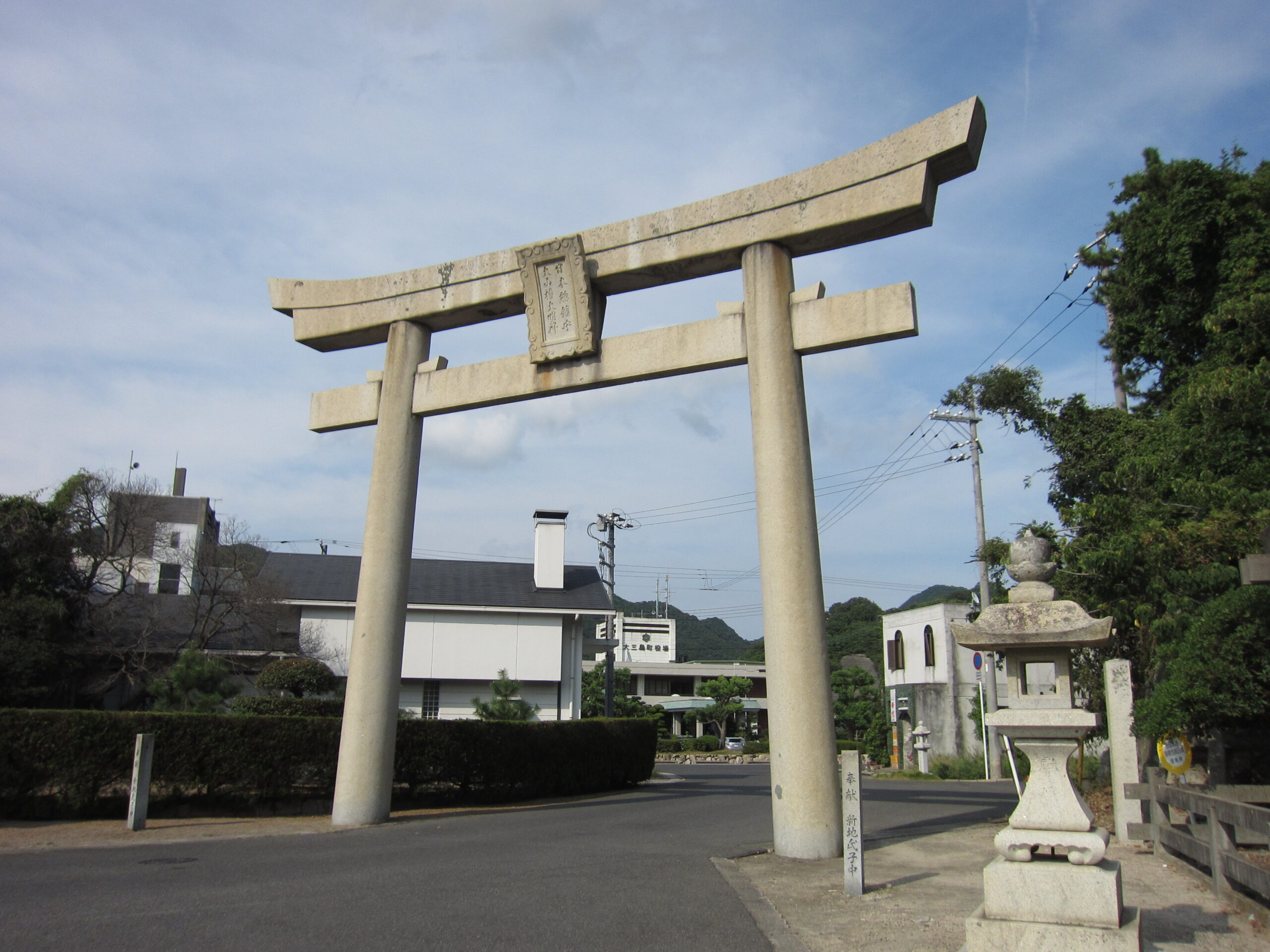
The Treasure Hall: Why ~80% of Japan’s Designated Armor Is Here
This is the single most important reason to visit Oyamazumi Shrine. The shrine officially states that about 80% of all armor and weapons designated as National Treasures or Important Cultural Properties in Japan are preserved here. The collection includes:
- 8 National Treasures and 76 Important Cultural Properties (plus prefectural-level items)
- Akaito Odoshi Yoroi (Red-Laced Armor) — attributed to Minamoto no Yoshitsune
- Murasakiaya Odoshi Yoroi (Purple Twill-Laced Armor) — dedicated by Prince Morinaga
- Swords, helmets, and battle gear spanning 800+ years of Japanese warfare
Why here? Warriors heading into battle across the strategically vital Seto Inland Sea stopped at Omishima to pray for victory. When they won, they returned to dedicate their finest equipment in gratitude. Over centuries, this created an unmatched concentration of Japan’s most significant military artifacts.
> “The collection of nationally designated treasure-class military equipment here is unmatched — famous names like Minamoto no Yoritomo, Yoshitsune, Taira no Shigemori, and Kiso Yoshinaka are all represented.”
> — *4travel.jp visitor review*
Treasure Hall Visiting Tips
| Detail | Info |
|—|—|
| Hours | 9:00 AM – 4:30 PM (last entry 4:00 PM) — per official current announcement |
| Admission | ¥1,000 adults / ¥800 HS & university / ¥400 elementary-JH |
| Time needed | 30 min (highlights) – 60+ min (thorough) |
| Photography | Not permitted inside the hall |
| Best strategy | Visit at the 9:00 AM opening to avoid tour groups |
The hall has two sections: the main Treasure Hall (国宝館) with armor and weapons, and the Marine Museum (海事博物館) with maritime artifacts. Both are included in the admission.
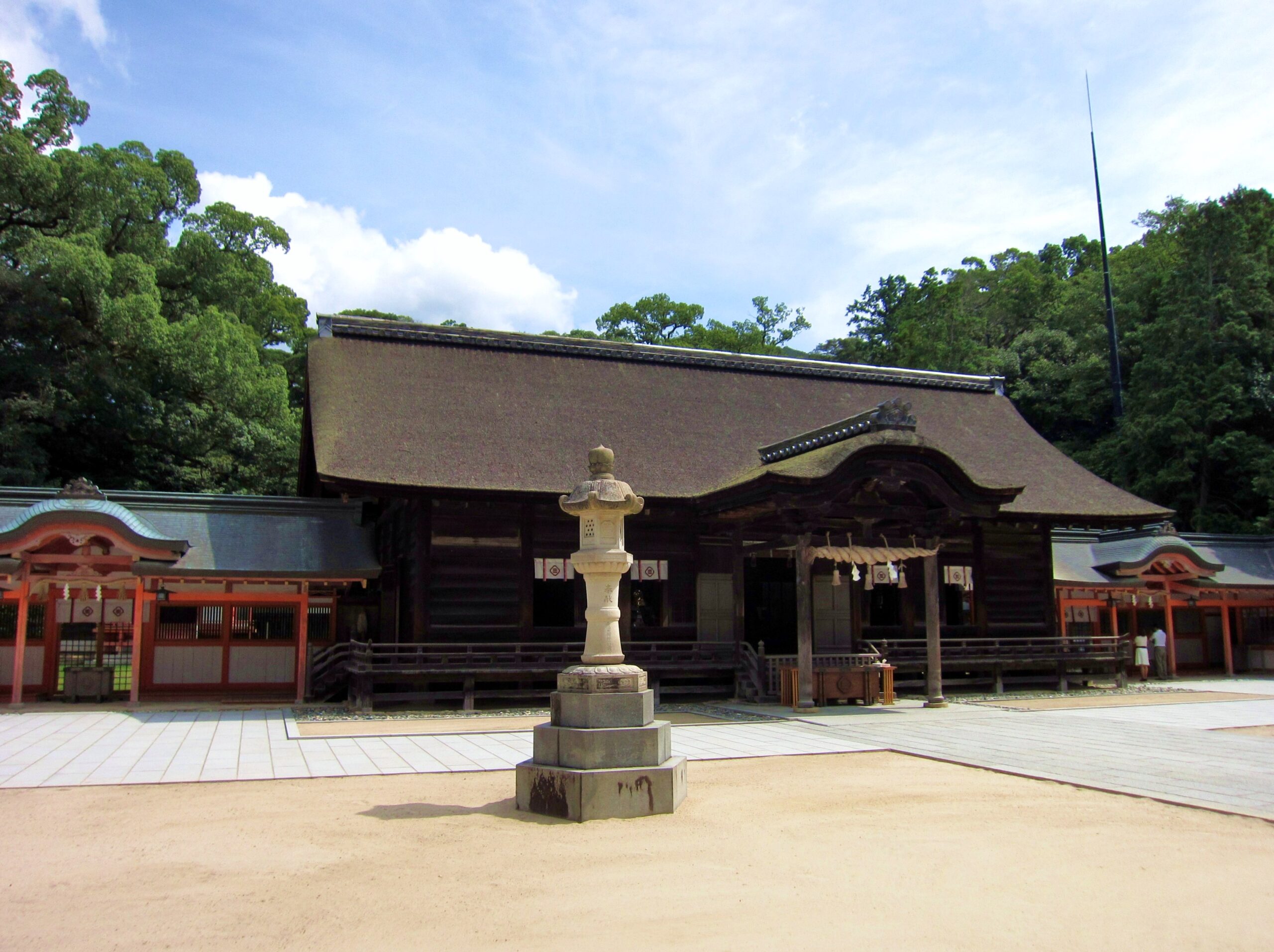
The 2,600-Year-Old Great Camphor Tree
The shrine’s second must-see is the Ochi-no-Mikoto Otaue no Kusu (Great Camphor), part of a camphor grove designated a Natural Monument of Japan:
- Estimated age: ~2,600 years (per the shrine)
- Trunk diameter: 11 meters; root spread ~20m
- Height: approximately 15.6 meters (per the Cultural Heritage Online registry)
- Tradition: Touching the trunk is believed to bestow longevity
The grounds contain 38 camphor trees with trunk diameter exceeding 1m, plus hundreds of smaller camphor trees (per the Cultural Heritage Online registry). The entire precinct is wrapped in a camphor forest that creates a naturally cool, fragrant atmosphere even in summer.
> “The ancient trees estimated at 3,000 years old are magnificent — you can feel the power radiating from them.”
> — *4travel.jp visitor review*
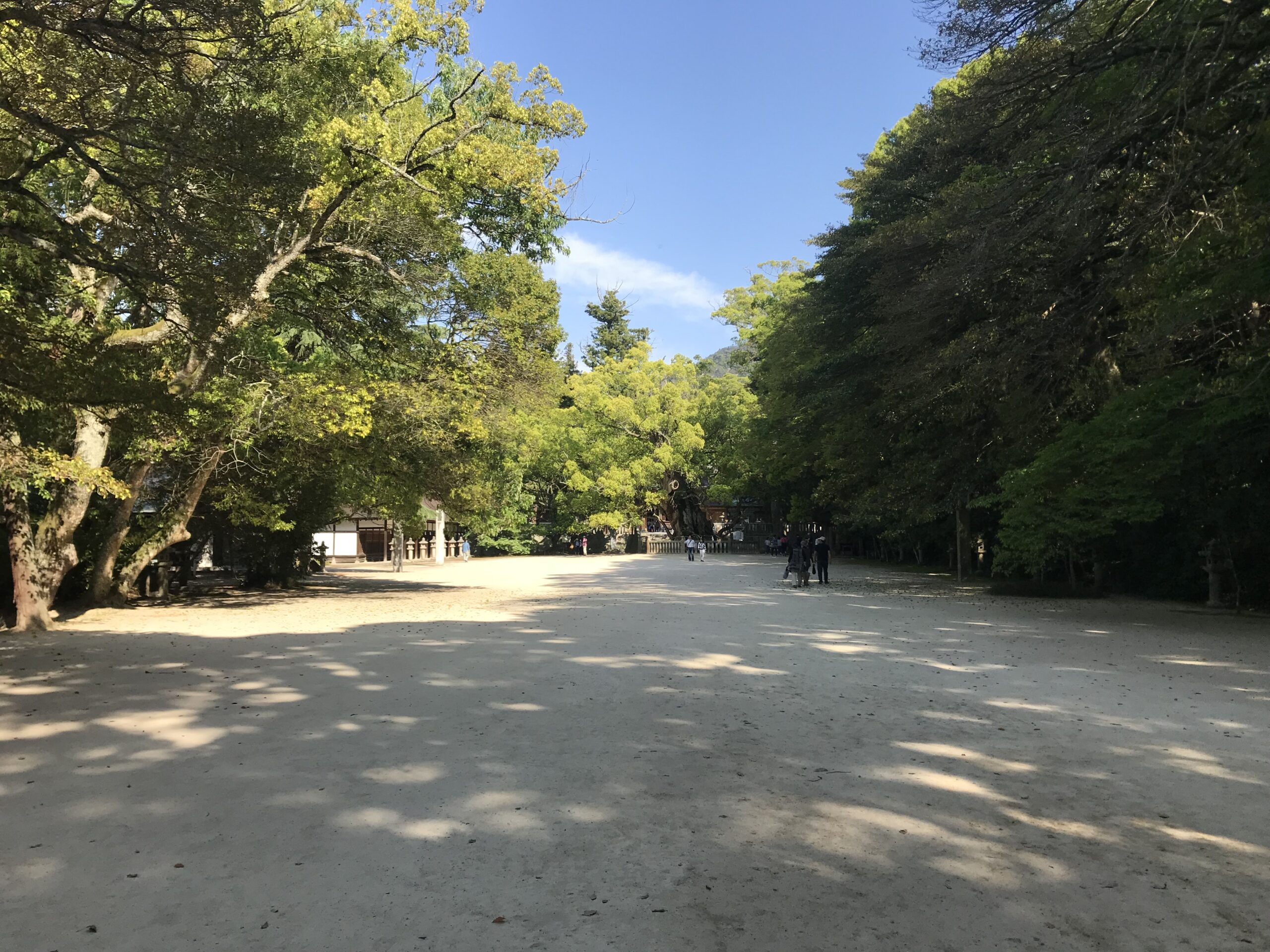
Spiritual Benefits
The principal deity Oyamazumi-no-Kami governs mountains, seas, and warfare, offering blessings in several areas:
Victory & Success — The shrine’s deepest tradition. Warriors came here before battle for centuries. Today, visitors pray before examinations, job interviews, athletic competitions, and business ventures.
Maritime & Traffic Safety — As guardian of the Seto Inland Sea shipping lanes, the shrine has protected travelers for 1,400 years. Modern visitors pray for safe travel by car, bicycle, or any means.
Longevity & Health — Connected to the 2,600-year-old camphor tree. Touching the trunk while praying is the traditional practice.
Business Prosperity — As deity of both mountains and seas, Oyamazumi-no-Kami is believed to support all industries.
Popular Amulets & Goshuin
| Item | Price | Notes |
|—|—|—|
| Victory Charm (勝守) | ¥800 | The shrine’s signature — for competitions and challenges |
| Longevity Charm | ¥800 | Blessed by the Great Camphor’s energy |
| Cyclist Charm | ¥800 | Shimanami Kaido exclusive, hugely popular |
| Traffic Safety Charm | ¥500 | Maritime and road safety |
| Goshuin (shrine seal) | ¥300 | Available 8:30 AM – 5:00 PM |
| Original Goshuin Book | ¥1,500 | Oyamazumi Shrine exclusive design |
Shimanami Kaido Cycling Connection
Oyamazumi Shrine sits near the midpoint of the 70km Shimanami Kaido cycling route connecting Onomichi (Hiroshima) and Imabari (Ehime). The shrine has embraced cycling culture with cyclist-specific charms. (Note: the famous “Sacred Ground for Cyclists” monument is at nearby Tatara Shimanami Park, ~15 minutes by bike from the shrine.)
For cyclists:
- The shrine is on Omishima Island, roughly 35km from Imabari — a natural turnaround point or rest stop
- Bicycle parking is available near the first torii gate
- The Cyclist Charm is one of the most popular souvenirs on the Shimanami Kaido
- Combine with nearby Tatara Shimanami Park (15 min ride) for the “Sacred Ground for Cyclists” monument and Tatara Bridge views
- Bicycle tolls on the Shimanami Kaido are waived through March 2028 (JB Honshi Highway)
Rental bikes: Available at Imabari Station, Onomichi Station, and several points along the route. Reserve in advance during spring/autumn weekends.
Best Times to Visit
By Season
| Season | Temp | Highlights | Crowds | Rating |
|—|—|—|—|—|
| Spring (Mar–May) | 15–22°C | ~40 cherry trees in bloom | Moderate | ★★★★★ |
| Summer (Jun–Aug) | 25–33°C | Grand Festival (旧暦4/22; 2026: June 7), lush camphor canopy | Low | ★★★★☆ |
| Autumn (Sep–Nov) | 15–20°C | Pleasant temps, Usuna Grand Festival (旧暦8/22) in early October | Moderate | ★★★★★ |
| Winter (Dec–Feb) | 5–10°C | Quiet worship, mild Seto Inland Sea climate | Very low | ★★★☆☆ |
Note: The Grand Festival is dated by the lunar calendar (旧暦4月22日), so the modern date varies each year. For 2026, the shrine’s official monthly notice lists June 7 (Grand Festival) and June 8 (Atomiya Festival). Check the official site for festival dates.
Best Times of Day
- Sunrise–9:00 AM: Near-empty grounds. The Great Camphor bathed in morning light is extraordinary.
- 9:00–10:30 AM: Treasure hall just opened, smallest crowds.
- 3:00–4:30 PM: Western light on the shrine buildings — best for photography, while still catching the last Treasure Hall entry.
Recommended Route (90 Minutes)
1. First Torii Gate (5 min) — Stone torii marking the entrance
2. Stone Approach (5 min) — Walk the edges (center is for the gods)
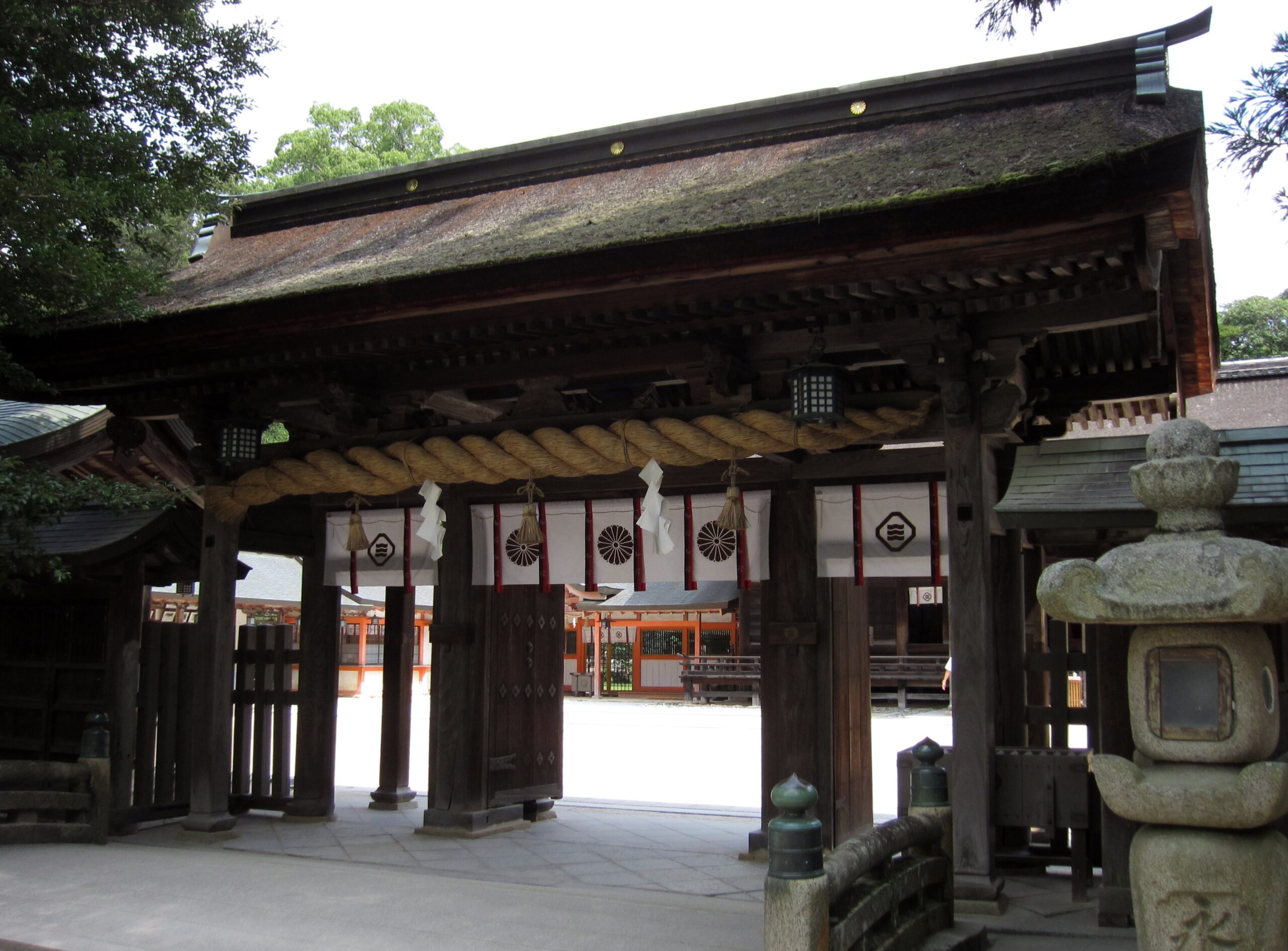
3. Shinmon Gate (3 min) — Massive shimenawa rope at the entrance
4. Temizuya (3 min) — Purify hands and mouth
5. Worship Hall & Main Hall (10 min) — Bow twice, clap twice, bow once. The main hall (重要文化財) is dated to 1427 by inscription
6. Great Camphor Tree (10 min) — Touch the trunk, pray for longevity
7. Inner Shrine Distant Worship (5 min) — Face the sacred mountain
8. Treasure Hall (30 min) — National treasure armor collection
9. Amulet Office (10 min) — Goshuin and charms (open 9:00 AM – 5:00 PM)
> “When I happened to arrive as the priests began their norito chanting, I stood listening and entered a kind of meditative state.”
> — *4travel.jp visitor review*
Practical Information
Access
Address: 3327 Miyaura, Omishima-cho, Imabari City, Ehime Prefecture
| Method | Route | Time |
|—|—|—|
| Car (from Shimanami Kaido) | Omishima IC → 7km to shrine | ~10 min |
| Car (from Imabari) | Imabari IC → Shimanami Kaido | 40 min |
| Car (from Onomichi) | Onomichi IC → Shimanami Kaido | 50 min |
| Bus (from Imabari Sta.) | Setouchi Bus (express) / Setonaikai Kotsu (express) → “Oyamazumi Jinja-mae” | ~65 min, ~¥1,190 one-way |
| Bus (from Fukuyama Sta.) | Shimanami Liner → “Omishima BS” → island bus (~12 min) → “Oyamazumi Jinja-mae” | Transfer required |
| Bicycle (from Imabari) | Shimanami Kaido cycling route | ~2.5 hrs |
Parking: Free. Beside the first torii: 13 spaces (official). Omishima Fuji Park municipal lot: 50 free spaces (5-min walk). Busy seasons may require Fuji Park lot.
Cycling note: The Shimanami Kaido bicycle toll-free initiative is extended through March 2028 (JB Honshi Highway).
Hours & Fees
- Shrine grounds: Sunrise to 5:00 PM (per official site)
- Treasure Hall: 9:00 AM – 4:30 PM (last entry 4:00 PM) — open year-round
- Grounds admission: Free
- Treasure Hall: ¥1,000 adults / ¥800 high school & university / ¥400 elementary-junior high
- Phone: 0897-82-0032
- Official website: https://oomishimagu.jp/
Nearby Attractions & Food
Attractions
| Place | Distance | Highlights |
|—|—|—|
| Hakata Salt Factory | 10 min drive | Free tours, salt tasting, ~30 min |
| Tatara Shimanami Park | 15 min drive | Close-up Tatara Bridge views, bike rental |
| Murakami Kaizoku Museum | 20 min drive | Pirate clan history, ¥310 admission |
Where to Eat
Tairyo (3-min walk from shrine)
- Fresh seafood bowls with local fish: Kaisendon ¥1,500, Tai-meshi Set ¥1,800
- Hours: 11:00 AM – 2:00 PM, 5:00 – 8:00 PM (closed Wed)
Michi-no-Eki Shimanami-no-Eki Mishima (5 min drive)
- Citrus sweets: Mikan Soft Cream ¥350, Lemon Cake ¥280
- Hours: 9:00 AM – 5:00 PM (open daily)
Omishima Brewery (5 min drive)
- Craft beer with local citrus: Mikan Ale ¥700, Lemon Beer ¥700
- Hours: 11:00 AM – 6:00 PM (closed Tue & Wed)
Souvenirs
- Okusu Manju — Signature shrine confection
- Hakata no Shio — Salt from the nearby factory, limited Omishima packaging
- Omishima Mikan — In season November–February
- Victory Charm & Cyclist Charm — The shrine’s most popular items
Model Itineraries
Half-Day Course (~4 hours)
| Time | Activity |
|—|—|
| 10:00 AM | Shrine worship + Great Camphor Tree |
| 11:00 AM | Treasure Hall |
| 12:00 PM | Seafood lunch at Tairyo |
| 1:00 PM | Michi-no-Eki souvenirs |
| 1:30 PM | Tatara Shimanami Park |
Full-Day Shimanami Cycling Course (~8 hours)
| Time | Activity |
|—|—|
| 8:00 AM | Depart Imabari by bicycle |
| 10:30 AM | Arrive Oyamazumi Shrine |
| 11:00 AM | Worship + Treasure Hall |
| 12:30 PM | Lunch at Tairyo |
| 1:30 PM | Hakata Salt Factory |
| 2:30 PM | Tatara Shimanami Park |
| 3:00 PM | Continue cycling or return to Imabari |
Accessibility & Special Circumstances
Wheelchair / Mobility: The grounds have gravel paths, but a paved route reaches near the main hall. Contact the shrine office (0897-82-0032) in advance for assistance.
Pets: Not permitted in the shrine grounds. No nearby pet-sitting facilities on the island — plan accordingly if traveling with pets.
Rainy days: The camphor canopy provides natural shelter, and the treasure hall is fully indoors. A rainy day can actually enhance the atmosphere of the ancient trees.
With children: The treasure hall’s samurai armor captures children’s imagination. The grounds are spacious for running. Allow extra time. Combined with the Hakata Salt Factory tour, it makes a full family day.
Frequently Asked Questions
How much time should I spend here?
Minimum 60 minutes (worship + camphor tree). Add 30–60 minutes for the treasure hall. The treasure hall alone is worth the trip.
Can I visit as part of Shimanami Kaido cycling?
Yes — this is one of the most popular stops. The shrine is roughly 35km from Imabari, perfect as a midpoint rest. Bike parking available.
Is there English signage?
Limited. The treasure hall has some English labels, but bringing a guidebook or translation app is recommended.
Does the parking lot get crowded?
The lot beside the first torii has only 13 spaces (per the official site). On weekends, holidays, and festival days, use the Fuji Park municipal lot (50 free spaces, 5-min walk).
When is the Grand Festival?
The Grand Festival follows the lunar calendar (旧暦4月22日), so the modern date varies each year. For 2026, it’s listed as June 7 in the shrine’s official monthly notice. The autumn Usuna Grand Festival follows the lunar calendar (旧暦8月22日) and falls in early October most years.
Is the main hall the original 1602 reconstruction?
No — that’s an outdated figure. Per Ehime Prefecture’s cultural property records, an inscription dates the current main hall to Ōei 34 (1427), in the early Muromachi period.
What exactly does “80% of national treasure armor” mean?
The shrine’s official wording is: “approximately 80% of military equipment designated as National Treasures or Important Cultural Properties (combined).” It includes 8 National Treasures plus 76 Important Cultural Properties — not 80% of National Treasures alone.
Nearby Power Spots
- Ishizuchi Shrine — Sacred mountain shrine, highest peak in western Japan
- Kotohira-gu — Famous 1,368-step shrine in Kagawa
- Itsukushima Shrine — Floating torii gate, UNESCO World Heritage
- Tosa Shrine — Guardian shrine of Tosa Province
Summary
Oyamazumi Shrine offers something no other place in Japan can: the chance to stand face-to-face with 80% of the nation’s designated treasure-class samurai armor, on a peaceful island surrounded by 2,600-year-old camphor trees and the calm Seto Inland Sea.
Whether you arrive by car, bus, or bicycle along the Shimanami Kaido, the combination of Japan’s greatest military treasure collection, ancient sacred trees, and island serenity makes this one of Shikoku’s most rewarding destinations. The warrior deity Oyamazumi-no-Kami has inspired those facing challenges for over 1,400 years — and the shrine’s quiet power continues to draw visitors seeking clarity and courage today.
—
Want to discover the power spot that’s right for you?
Your connection to sacred places depends on your personal energy profile. To find which shrines and temples align best with your spiritual nature, try our free compatibility assessment (takes just 3 minutes).
→ Take the Free En Profile Assessment
—
*Information current as of May 2026. Verify latest hours and fees via the official website before visiting.*
あなたに最適なパワースポットを知りたい方へ