The Golden Hall: Paradise on Earth from Japan’s Medieval Golden Age
Chusonji Konjikido (Golden Hall) in Hiraizumi, Iwate Prefecture stands as one of Japan’s most extraordinary Buddhist treasures—a small Amida hall entirely covered in gold leaf, adorned with mother-of-pearl inlay and intricate lacquerwork. Built during the late Heian period by the Oshu Fujiwara clan, this “Pure Land on Earth” has gleamed for over 850 years, transporting visitors back to Japan’s medieval golden age.
Registered as a UNESCO World Heritage Site in 2011 as part of “Hiraizumi—Temples, Gardens and Archaeological Sites Representing the Buddhist Pure Land,” Konjikido also holds the distinction of being Japan’s first designated National Treasure building. Approximately one million visitors annually come to witness this architectural masterpiece from around the world.
Walking the cedar-lined Tsukimizaka approach, paying respects at the main hall, then standing before the Golden Hall—when the shelter building’s doors reveal the radiant interior, many visitors find themselves speechless. The golden world before them embodies the prayers of Fujiwara no Kiyohira, who dreamed of “a world without war.” His profound wish for peace resonates across the centuries.
Highlights and Attractions
The Oshu Fujiwara Clan and Hiraizumi’s Golden Culture
Chusonji was founded in 850 CE by the Buddhist monk Ennin (Jikaku Daishi). Later, between 1105 and 1124, Fujiwara no Kiyohira, first lord of the Oshu Fujiwara clan, undertook massive construction to transform it into a major religious center.
Kiyohira had lost his father, wife, and children in the Former Nine Years’ War and Later Three Years’ War, experiencing firsthand the horrors of conflict. His dedication prayer for Chusonji’s construction reads: “This northern region has been treated as a barbarian frontier, its people regarded as beasts. I wish to spread Buddha’s teachings here and guide all beings—humans, animals, even plants—to the Pure Land.”
The Oshu Fujiwara clan ruled Hiraizumi for four generations over approximately 100 years, building it into Japan’s second-largest city after Kyoto. Konjikido contains the remains of the first three lords—Kiyohira, Motohira, and Hidehira—along with the severed head of the fourth lord, Yasuhira, preserving both the glory and tragedy of the Fujiwara dynasty.
The Overwhelming Beauty of the National Treasure Golden Hall
Konjikido was completed in 1124 as a small Amida hall measuring approximately 5.5 meters per side. The entire structure is covered in gold leaf, with the interior decorated in mother-of-pearl inlay, maki-e lacquerwork, and openwork metal fittings.
The inner altar houses eleven Buddhist statues centered on Amida Nyorai, flanked by Kannon and Seishi Bodhisattvas, six Jizo Bodhisattvas, and two Heavenly Kings. These statues, also covered in gold leaf with mother-of-pearl halos, create a vision of the Buddhist Pure Land.
Most remarkable is the raden mother-of-pearl work. Created from luminescent shells of abalone and turban snails, these decorations shimmer with rainbow iridescence as light plays across their surfaces. The craftsmanship of artisans from over 850 years ago continues to captivate visitors today.
Konjikido is protected within a shelter building (originally a Kamakura-period structure, now a 1968 reconstruction). Viewing is through glass, but the golden radiance remains deeply impressive.
The Cedar-Lined Tsukimizaka Approach
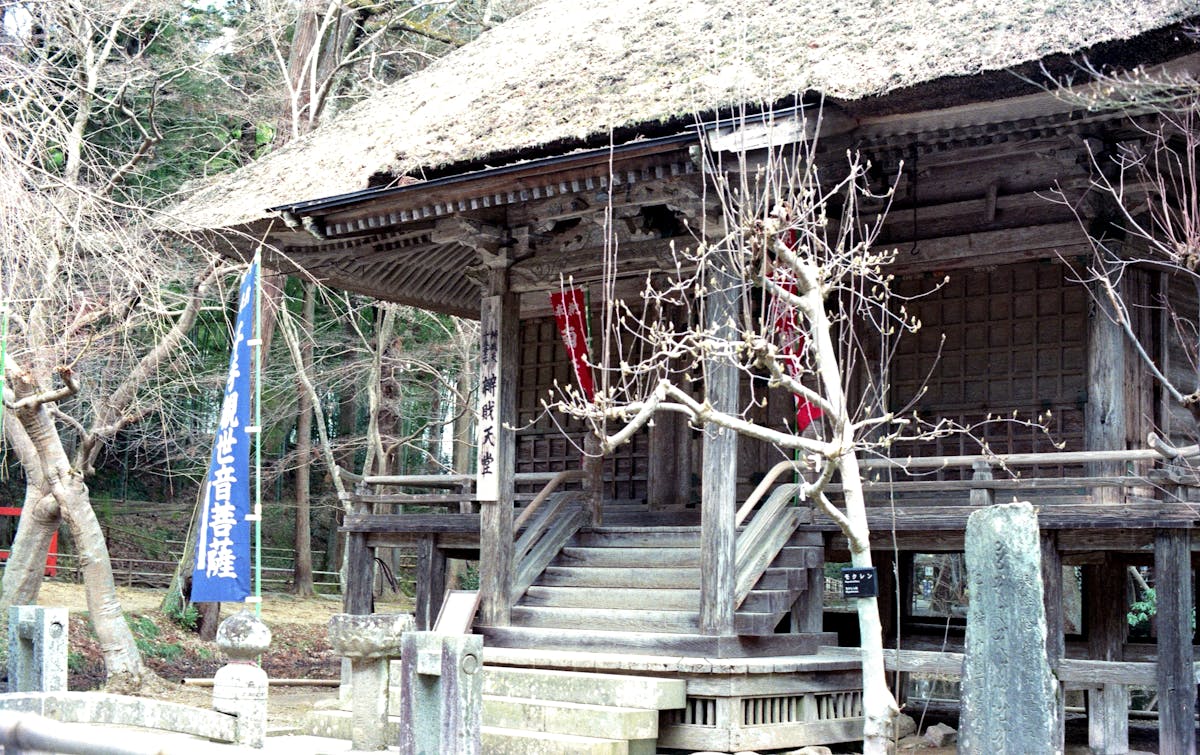
The main approach from Chusonji’s entrance to the main hall and Konjikido is called Tsukimizaka (“Moon-Viewing Slope”), lined with cedar trees 300-400 years old. The approximately 800-meter path with 90 meters of elevation gain creates a natural transition from the secular world into sacred space.
Along the approach stand twelve temple buildings including Benkei-do (dedicated to the loyal retainer Benkei), Yakushi-do, and Jizo-do, each with its own history and significance. Benkei-do is especially popular with admirers of the legendary warrior monk and his master Yoshitsune.
Autumn brings beautiful contrast between evergreen cedars and colorful maple leaves; winter transforms the grounds into a silent snowscape. Every season offers a chance to experience this space of prayer unchanged since the Heian period.
Spiritual Benefits and Blessings
Pure Land Buddhism and Inner Peace
Chusonji Konjikido is a sacred site of Amida Buddhism, enshrining Amida Nyorai—also called “Buddha of Infinite Light and Life”—who vows to guide all beings to the Western Pure Land.
Praying at the Golden Hall is believed to bring inner peace, spiritual purification, and blessings for ancestral memorial. Those at life crossroads or carrying emotional burdens often report “feeling cleansed” and “gaining renewed positivity” after their visit.
Fortune and Protection
With over 850 years of history, Chusonji draws many seeking fortune and protection from misfortune. The main hall offers goma fire rituals for various prayers including safety, business success, and protection from evil.
Academic Success
The Yakushi Hall within the grounds enshrines Yakushi Nyorai, the Medicine Buddha known as protector of eyesight. Students facing exams visit for academic success, and the hall is especially known for blessings related to vision and eye health.
Visitor Testimonials
*”Standing before the Golden Hall, I was overwhelmed by indescribable solemnity. The prayers of people from 850 years ago still feel alive here.”* (Woman in 50s, Kanagawa)
*”I visited during a difficult period at work. Walking slowly up Tsukimizaka, my thoughts naturally settled and clarified.”* (Man in 30s, Tokyo)
*”Visiting with my history-loving husband, contemplating the rise and fall of the Fujiwara clan became an opportunity to reflect on our own lives.”* (Woman in 40s, Miyagi)
Best Times to Visit
Spring (April-May) ★★★★☆
Late April through early May brings cherry blossom season. Blossoms throughout the grounds combine beautifully with fresh green along Tsukimizaka. Golden Week sees crowds, but arriving by 8 AM allows relatively peaceful worship.
Comfortable temperatures of 10-20°C (50-68°F) are ideal for the uphill approach. During May’s wisteria festival, the temple’s wisteria trellis displays magnificent blooms.
Summer (June-August) ★★★☆☆
Summer’s cedar shade provides cool relief, drawing visitors seeking respite from heat. However, late July through mid-August tourist season brings crowds. Temperatures reach 25-30°C (77-86°F) with high humidity—stay hydrated.
Mid-August features “Chusonji Takigi-Noh,” outdoor Noh theater performed by torchlight.
Autumn (September-November) ★★★★★
Autumn is Chusonji’s most beautiful season. From late October through early November, the entire grounds blaze with autumn colors. The contrast of green cedars with red and gold maples is breathtaking, drawing photographers from across Japan.
November 1-3 brings the Autumn Fujiwara Festival with memorial services for the four Fujiwara lords and traditional performing arts.
Comfortable temperatures of 10-18°C (50-64°F) are ideal for temple visits. Weekend parking during peak foliage may fill by 9 AM—early arrival recommended.
Winter (December-March) ★★★☆☆
Winter blankets Hiraizumi in snow, enveloping everything in silence. Snow-covered Konjikido creates ethereal scenes, and fewer visitors allow intimate, solemn atmosphere.
January 1-3 sees New Year’s worshippers, but otherwise the season remains quiet. Temperatures of -5°C to 5°C (23-41°F) require serious cold-weather gear. The approach is cleared of snow but can be slippery—watch your footing.
Best Time Slots
Opening (8:30-9:30 AM): Fewest visitors; ideal for photography and peaceful worship.
Late Morning (10:00 AM-12:00 PM): Tour groups begin arriving, but ample time for Golden Hall viewing.
Afternoon (1:00-3:00 PM): Busiest period, especially on weekends and holidays; lines may form at Konjikido.
Late Afternoon (3:30 PM-closing): Western sun illuminates the grounds beautifully; crowds thin out.
Visiting Guide
Recommended Route
The ideal Chusonji visit follows this route:
1. Tsukimizaka entrance up the approach (about 10 minutes)
2. Benkei-do to honor the legendary warrior monk
3. Main Hall for worship (goshuin stamps available here)
4. Sankozo Museum for National Treasures and Important Cultural Properties
5. Konjikido to view the Golden Hall
6. Kyozo and Old Shelter Building
7. Return via the same approach
Time required: Standard 90 minutes; thorough visit 2-3 hours
Admission and Hours
Konjikido, Sankozo, Kyozo, Old Shelter (combined ticket):
- Adults: 800 yen
- High school students: 500 yen
- Junior high students: 300 yen
- Elementary students: 200 yen
Hours:
- March 1 – November 3: 8:30 AM – 5:00 PM
- November 4 – February: 8:30 AM – 4:30 PM
Main Hall and approach: Free; open all hours (no night lighting)
Worship Etiquette
At the Main Hall:
1. Purify hands and mouth at the temizuya basin
2. Offer coins, ring the waniguchi gong
3. Join palms in silent prayer
4. Bow and step back
At the Golden Hall:
1. Maintain silence inside the shelter building
2. Though viewing through glass, offer prayers with joined palms
3. Photography prohibited inside (exterior okay)
4. Follow staff instructions
Goshuin Information
Main Hall: “Joroku Butsu” stamp (300 yen)
Konjikido: “Konjikido” stamp (300 yen)
Mine Yakushi-do: “Mine Yakushi” stamp (300 yen)
Over 10 stamp varieties available; collecting all achieves “completion.” Stamp books sold at the main hall office (from 1,500 yen).
Attire and Equipment
Recommended:
- Comfortable walking shoes (800m approach with uphill sections)
- Easy-to-move clothing
- Season-appropriate layers
Useful items:
- Drinking water
- Rain gear
- Camera (tripods allowed but considerate use during crowds)
Notes:
- Photography prohibited inside Konjikido
- Entire grounds are non-smoking
- Pets allowed if carried or in carriers
Essential Information
Access
Address: 202 Koromonoseki, Hiraizumi, Nishiiwai District, Iwate 029-4102
By Train:
- JR Tohoku Line to “Hiraizumi Station”
- 25-minute walk from station, or “Runrun Bus” to “Chusonji” (about 5 minutes, 150 yen)
- About 8 minutes by JR from Ichinoseki Station
By Car:
- About 5 minutes from Tohoku Expressway “Hiraizumi-Maesawa IC”
- About 15 minutes from “Ichinoseki IC”
- GPS setting: “Chusonji Parking”
Basic Information
Hours: 8:30 AM – 5:00 PM (4:30 PM in winter)
Closed: Open year-round
Admission: Adults 800 yen, High school 500 yen, Junior high 300 yen, Elementary 200 yen
Time needed: Standard 90 minutes – 2 hours
Parking: Municipal Lot 1: 400 spaces (400 yen), Lot 2: 300 spaces
Official website: https://www.chusonji.or.jp/
Contact: 0191-46-2211
Area Information
Nearby Attractions
Motsuji Temple (5 minutes by car):
Another World Heritage site featuring a Pure Land garden. This Heian-period garden style treats the pond as the paradise lake—elegant and serene. Admission 700 yen. Most visitors combine with Chusonji for a half-day course.
Takadachi Gikeido (15-minute walk):
The legendary site of Minamoto no Yoshitsune’s final moments. Overlooking the Kitakami River, a statue of Yoshitsune stands on the hilltop. Admission 300 yen. The famous haiku poet Matsuo Basho composed his verse “Summer grasses—all that remains of warriors’ dreams” here.
Muryokoin Temple Ruins (5 minutes by car):
Ruins of a temple built by Fujiwara no Hidehira, modeled after Kyoto’s Byodoin. The buildings are gone, but foundation stones and pond remains hint at its former grandeur. Free admission. Part of the World Heritage site.
Geibikei Gorge (20 minutes by car):
Scenic gorge of unusual rock formations and flowing water. The famous “Kakko Dango” (flying dango) arrives by rope from across the gorge—a unique experience (3 pieces for 300 yen).
Recommended Restaurants and Cafes
Basho-kan (Adjacent to parking, 1-minute walk):
Long-established restaurant serving Hiraizumi’s famous “wanko soba”—buckwheat noodles served in 12 small bowls in rapid succession (from 1,760 yen). Calm atmosphere ideal for post-temple dining. Hours: 10:00 AM – 4:00 PM.
Ekimae Basho-kan (In front of Hiraizumi Station):
Sister shop to Basho-kan. Besides wanko soba, “Hiraizumi Soba” (hot or cold, 880 yen) is popular. Excellent station-front access. Hours: 10:00 AM – 4:30 PM; closed Thursdays.
Yume-no-Kaze (Near approach entrance):
Local ingredients in regional cuisine. “Maesawa Beef Steak Don” (2,500 yen) and “Mochi Zen” rice cake set (1,200 yen) are popular. Hours: 11:00 AM – 3:00 PM.
Koromogaiya (At approach entrance):
Convenient tea house for pre- or post-worship refreshments. Famous “Benkei Chikara Mochi” power rice cakes (350 yen) come in kinako and anko varieties. Energy boost recommended. Hours: 9:00 AM – 4:30 PM.
French Restaurant L’Aureole (10 minutes by car):
Authentic French cuisine featuring Hiraizumi vegetables. Lunch course from 2,800 yen. Ideal for special occasions. Reservations required.
Souvenirs and Local Products
Konjikido Yokan: Gold leaf-decorated sweet bean jelly—the quintessential Chusonji souvenir.
Hidehira-nuri: Hiraizumi’s traditional lacquerware. Chopsticks and bowls make premium gifts.
Maesawa Beef Products: One of Japan’s top three wagyu brands. Retort curry, tsukudani, and more.
Nanbu Senbei: Classic Iwate souvenir crackers in sesame, peanut, and other varieties.
Accommodations
Hotel Musashibo (10-minute walk):
Closest hotel to Chusonji. Japanese and Western rooms. Hot spring bath. From 12,000 yen with two meals.
Hiraizumi Hotel Musashibo (5 minutes by car):
Popular hot spring inn with spacious Japanese rooms. Maesawa beef dinner plans available. From 15,000 yen with two meals.
Ichinoseki Onsen Area (20 minutes by car):
Multiple hot spring inns in Ichinoseki City. Good for combining with Geibikei Gorge visits. From 10,000 yen with two meals.
Model Itineraries
Half-Day Course (3-4 hours):
9:00 AM – Arrive Hiraizumi Station
9:15 AM – Runrun Bus to Chusonji
9:30 AM – Begin climbing Tsukimizaka
10:00 AM – Main Hall worship and goshuin
10:30 AM – Sankozo Museum
11:00 AM – Konjikido viewing
11:30 AM – Descend, lunch near parking
12:30 PM – Move to Motsuji
1:00 PM – Motsuji garden stroll
2:00 PM – Return to Hiraizumi Station
Full-Day Course (7-8 hours):
8:30 AM – Arrive Hiraizumi Station, rent bicycle
8:45 AM – Takadachi Gikeido (30 min)
9:30 AM – Chusonji worship (2 hours)
11:30 AM – Lunch near approach
12:30 PM – Motsuji (1 hour)
1:30 PM – Muryokoin Temple Ruins (30 min)
2:15 PM – Geibikei Gorge (1 hour, flying dango experience)
3:30 PM – Souvenir shopping in Ichinoseki
4:30 PM – Ichinoseki or Hiraizumi Station
Visitor Reviews and Experiences
“Breathtaking First Encounter”
Man in 50s, Chiba
*”The first time I saw Konjikido, I gasped involuntarily. It’s a small building, but that radiance is overwhelming. The fact that 850-year-old technology could create something like this moved me deeply.”*
“Autumn Colors Worth the Trip”
Woman in 40s, Fukushima
*”Visited during autumn foliage season. The contrast of cedar green with autumn colors along Tsukimizaka was spectacular—I spent an hour just on the approach, taking photos.”*
“Winter’s Special Serenity”
Man in 30s, Iwate
*”Winter Hiraizumi is quiet and few people visit. Snow-covered Chusonji was ethereal. Cold-weather gear is essential, but this stillness is winter’s gift.”*
“History Comes Alive”
Woman in 40s, Akita
*”Visited with my Yoshitsune-fan daughter. Standing before Basho’s poem monument at Takadachi, we felt history’s weight. Not just Chusonji—the whole area is full of discoveries.”*
Frequently Asked Questions
Q: How much time should I allow?
A: Konjikido alone takes about 1 hour; including main hall and Sankozo, plan 90 minutes to 2 hours. Those wanting to enjoy Tsukimizaka leisurely should allow 2-3 hours.
Q: Does parking get crowded?
A: During autumn foliage (late October – early November) weekends, lots may fill by 9 AM. Weekdays or early arrival recommended.
Q: How many goshuin stamps are available?
A: Over 10 varieties throughout the grounds, 300 yen each at main hall, Konjikido, Mine Yakushi-do, etc. Collecting all achieves “completion.”
Q: Is wheelchair access available?
A: Tsukimizaka’s slope makes wheelchair passage difficult. Wheelchair users should use the upper Konjikido parking lot, offering relatively flat access to Konjikido and Sankozo.
Q: Can I visit both Chusonji and Motsuji?
A: Yes, allow 3-4 hours for both. Five minutes by car or accessible by bus/foot. No combined ticket, but this is the standard Hiraizumi sightseeing route.
Nearby Power Spots
Summary
Chusonji Konjikido stands as one of Japan’s most magnificent Buddhist treasures—a golden vision of paradise that has shone for over 850 years. The prayers of Fujiwara no Kiyohira, who wished for “peace for all beings,” remain embedded in every gold leaf, every mother-of-pearl inlay, every brushstroke of lacquer.
Walking the ancient cedar approach, standing before that radiant golden hall, one cannot help but feel the weight of history and the enduring power of faith. Whether you seek spiritual renewal, historical enlightenment, or simply wish to witness one of humanity’s most extraordinary artistic achievements, Konjikido offers an experience that transcends time.
We hope this guide helps you plan your own transformative visit to the Golden Hall of Chusonji.
*Information in this article is current as of November 2025. Please verify details on the official website before your visit.*
あなたに最適なパワースポットを知りたい方へ